
Backpacker’s Guide to Chicken Buses in Central America
Cat is Out of the Office contains affiliate links and is a member of the Amazon Services LLC Associates Program. If you make a purchase using one of these Amazon links, I may receive compensation at no extra cost to you. See my Disclosure Policy for more information.
Taking chicken the chicken buses in Central America is a must-have experience and a right of passage for every backpacker!
This unique form of public transportation – only called “chicken buses” by tourists – has been around for decades and is still used by locals and tourists alike. It’s also one of the most affordable (and fun!) ways to get around this amazing region.
Chicken buses can seem very intimidating if you’ve never ridden one before (that’s how I felt when I first arrived in Central America), but you have to trust me on this one – you’ll be fine!
One of my proudest moments as a backpacker was mastering the Central American chicken buses. I loved the adventure of riding chicken buses in Central America so much that I traveled all the way from El Salvador to Honduras via chicken buses – and I did it solo, for less than $10!
This guide will help equip you with everything you need to make your trip on the chicken busses of Central America smooth and enjoyable.
From how much it costs to where they go and tips for staying safe, I’ve got all the information you need for how to ride chicken buses in Central America right here!
So grab your backpack and let’s hit the road – Central America awaits!
🚙 Thinking about renting a car in Central America? I rented a car in El Salvador and was able to see so much more than if I only traveled by bus. I recommend using Discover Cars to compare costs and get the best deal.
Summary: How to Ride a Central America Chicken Bus

In a hurry and don’t have time to read the full article?
Here are the most important things to know about riding the chicken buses in Central America.
🚌 Find your bus at a terminal or flag it down on the road.
🗺️ The final destination and route are usually displayed on the bus but confirm with the driver when you get on.
🎟️ You’ll pay a fare to either the driver or the driver’s coworker called “el ayudante“. Sometimes they will collect it after you’re seated.
🎒 Sometimes they’ll charge you extra for a big bag. Don’t worry if they want to put your bag on the roof.
👨👩👧👦 These buses get crowded so grab a seat if you can and mind your belongings.
📍 Don’t be shy when it’s time to get off. If it’s not a popular stop, you may have to yell so the driver can hear you.
Enjoy this truly local experience!
Book with Booking.com today to get epic deals on hotels, flights, rental cars & attractions!
What is a Chicken Bus in Central America?

If you’re planning a trip to Central America, then you may have heard of the unique form of transportation known as the “Chicken Bus”.
These quirky buses are not only an efficient way for locals to get around, but they also provide a fun and interesting experience for travelers. You’ll mainly find chicken buses in Guatemala, El Salvador, Honduras, and Nicaragua.
The Chicken Buses got their name from tourists because it was common for locals to transport farm animals like chickens on the local bus. It’s not too common to see animals being transported these days (I would have loved to see chickens at least once), but the name stuck.
You’ll recognize the chicken buses of Central America by their bright colors and decorations. They are actually old yellow school buses that were auctioned off in the United States once they hit 10 years of age with over 150,000 miles on them.
After being purchased by entrepreneurs in Central America, these buses are painted and refurbished into works of art with vibrant colors and sometimes even fun club-like lighting and full sound systems inside! You’ll often find religious sayings like “Jesus is my driver” or “God is Love” written across them.
These privately-owned buses are then used to transport locals around the local bus routes.
If you want a truly unique experience while traveling through Central America, take the chicken bus!
If you need a movie to download for your upcoming journey, check out La Camioneta: The Journey of One American School Bus.
⛑️ My number one safety tip for travelers, no matter where you’re going or how long your trip is, is to buy SafetyWing insurance to protect your trip.
Why are they called “Chicken Buses?”
It all goes back to their history as the name was given by tourists who noticed that locals would often transport farm animals like chickens on the local bus.
Although this isn’t very common nowadays – I sadly never saw any chickens being transported on the bus during my months in Central America – the name has stuck and these colorful buses have become a must-see experience for travelers in Central America!
Other Names for Public Buses in Central America

I’ve been getting better and better at speaking Spanish the longer I travel in Latin America, and it’s interesting to learn all of the different words for “bus” in Central America.
If you only learn one word, learn “el autobús” – that’s the official word for bus throughout Latin America, although it’s not the most commonly used in Central America. But everyone will understand it.
Other ways to say “bus” in Central America are “la camioneta,” “la burra,” or simply “el bus.”
My favorite is “los diablos rojos” which translates to “the red devils” – only used in Panama.
💧 Thirsty? Always have clean drinking water on hand and save money with this reusable water bottle! It works great, turning tap water into safe-to-drink water that tastes good.
What to Expect When Riding Chicken Buses in Central America
- Buses usually won’t leave the terminal until they’re somewhat full, so make sure to get there early and be patient.
- Similarly, as buses don’t typically run on a schedule, it’s important to ask the locals what time your bus is – for example, along the Ruta de las Flores in El Salvador, my return bus only ran a couple of times a day, so you don’t want to miss it!
- Expect to find small seats meant for children, no seatbelts, and no air conditioning on these buses.
- Overcrowded buses with no enforced maximum capacity, so expect a lack of personal space.
- Prices are very affordable so it won’t put too big of a dent in your wallet. You may be charged extra for luggage depending on the driver (maybe an extra $1, nothing crazy).
- There will be frequent stops along the way because there are no set bus stops and passengers can get off anywhere.
- You’ll experience a truly authentic local culture as most other passengers will likely be locals like yourself – prepare for some curious stares!
- These old buses usually emit lots of smog and run on winding roads at high speeds – hold onto something tight!
- Sometimes there are unique amenities such as woofers, stereos, neon lights, and flat-screen TVs for entertainment – this is part of what makes taking a chicken bus ride such an exciting adventure! Bring your earphones if you don’t like the driver’s choice of music.
- Vendors hopping on and off to sell all sorts of wares from food to medicine to clothes – I love seeing what kinds of crazy things they’re selling and sometimes enjoy a snack.
No two chicken bus rides in Central America are ever the same. Whether you’re zig-zagging through the mountains or meandering along coastal roads, you’re sure to have an unforgettable experience.
How to Take a Chicken Bus in Central America

Follow these steps to ride the chicken bus in Central America comfortably and confidently:
Step 1: Confirm the terminal: Not all buses leave from the main terminal, so double-check the location of your bus before heading out. Ask locals for directions or use offline maps to ensure you arrive at the right spot. A lot of times you’ll hear workers yelling the name of the destination to try to attract customers.
You can flag down the bus like a taxi if you’re getting on somewhere along the route.
Step 2: Find the right bus: The final destination and route number are usually displayed on the front of the bus, but if you’re unsure, don’t hesitate to ask the driver or other passengers. At major stops, the driver may also shout out the destination. Routes are fixed, often along major roads and highways and through main towns.
Step 3: Verify before boarding: Confirm with the driver, using key phrases in Spanish, that the bus is heading to your intended destination. If you don’t know Spanish, simply saying the name of the destination is usually enough. Most drivers don’t speak English. I do this 100% of the time, no matter how confident I am that I’m on the right bus. It has saved me so many times!
Step 4: Pay the fare: The driver sometimes collects the fare as you board the bus, but oftentimes there his coworker called “ayudante” or “el brocha” will collect fares after you’re in your seat. You may need to tell him where you’re headed so that he knows how much to charge if there’s no set price. Prices are not always posted.
The ayudante also handles bags that need to be stored on top of the bus. And don’t worry if you don’t get your change right away – they’re pretty good at coming back around when they have smaller change. Or just give the exact amount if you’re worried.
Step 5: Find a seat: Take a seat, and enjoy the scenery. You may have to navigate narrow aisles, but this is all part of the experience. If no seats are available, prepare yourself for a standing trip, holding on to the overhead racks or handles.
Step 6: Tell the driver when you want to get off: If you’re not getting off at a popular stop, you may need to ask the driver to let you off. They’ll typically let you off anywhere along the route. Don’t be afraid to be loud when you need to get off!
👉 Find the best local tours with this search engine (and the best deals)!
16 Tips for Using Chicken Buses in Central America

1. Carry small change for paying the fare and buying snacks from the vendors
2. Bring water, toilet paper, earphones, motion sickness pills, and comfortable clothes – there are windy roads, no air conditioning, and limited bathroom options
3. Get on at the first stop when possible; try to get a seat if you can
4. Be prepared to stand for long periods of time if there are no available seats
5. Leave your flashiest valuables at home so as not to draw unwanted attention
6. Secure all bags somewhere secure where you can keep a close eye on them – be careful about having your bag under your seat because some travelers have had their bags slashed or stolen
7. Try not to travel after dark unless it is absolutely necessary; look around before getting off at destination points
8. Look out for pickpockets in crowded buses, especially during peak hours
9. Have an idea of where you’re going beforehand – I like to follow along on offline Google maps
10. If your big bag will be thrown on the roof or in the back, put a rain cover on it to keep it dry and clean
11. Factor in extra time for your journey; chicken buses make a lot of stops, and delays are common – I got stuck in mudslide traffic almost daily in El Salvador
12. Frequently used city routes have a lot of buses that run the route and there may be another bus every half hour or so, or there may not be another for several hours, so ask a local for the schedule
13. If you’re going to small towns or further away, expect there to be fewer buses
14. Always find out when the last bus to your destination is leaving so that you don’t miss it!
15. Be prepared for the possibility of overcrowding and uncomfortable seating arrangements. Pack light and be prepared to squeeze into tight spaces.
16. Limit fluid intake and bring toilet paper or wet wipes – there will be limited opportunities to use a toilet since you have to get off the bus to use it
👉 I’ve solo-traveled all over the world and LOVE to take tours that I find on Viator. They have so many 5-star tours, and it’s easy to see which ones have the best ratings. I’ve also had to use their 24/7 customer service more than once and was helped immediately.
Why You Should Ride Chicken Buses in Central America

Chicken buses in Central America are the best way to explore and experience the local culture.
On a chicken bus, you’ll get an up-close view of the stunning landscapes, vibrant cities and towns, and diverse cultures that Central America has to offer.
Plus, they are cheap, reliable, and can get you almost anywhere.
Whether you’re a budget traveler or an intrepid explorer looking for off-the-beaten path adventures in Central America, riding chicken buses is a must!
How Much Do Chicken Buses Cost in Central America?
Fares on chicken buses are usually very affordable – most short rides cost less than $2 USD, while longer trips can go as low as $9 USD.
Sometimes the driver will collect the fare as you board, but oftentimes the ayudante will collect the fare after you’re already seated. Sometimes the price is posted at the front of the bus, and other times you’ll have to wait until the ayudante asks for the fare.
Once or twice I was asked for a fare that seemed too high to me, and I had to negotiate it down (it’s rare, but sometimes you’ll be asked to pay more as a tourist since they think you don’t know any better).
It’s common for an extra $1 to be charged for a large bag.
You’ll need to pay in local currency, and it’s best to have small change since the bus driver won’t always have the change to give you.
👉 Find out how much it costs to protect your trip today with SafetyWing travel insurance.
Are Chicken Buses in Central America Safe?
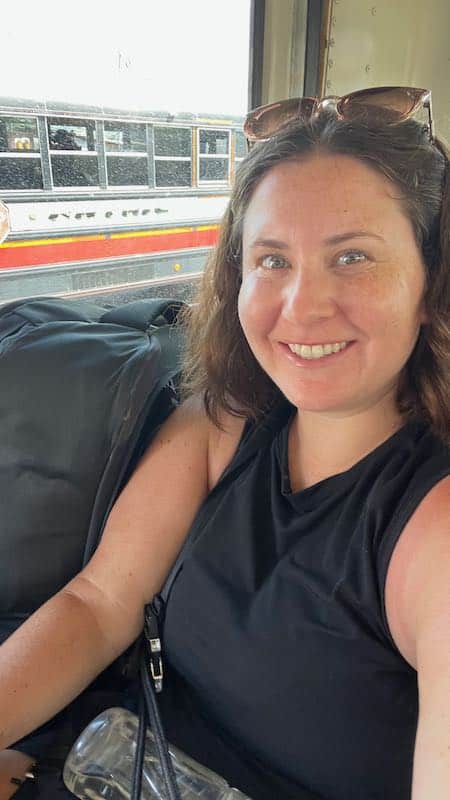
Like any public bus, you need to be aware of your surroundings and your belongings
But I road the chicken buses dozens of times all over Central America, often solo, including all the way from El Salvador to Honduras, and didn’t have any safety problems.
The biggest event I ever witnessed on my dozens of chicken bus rides in Central America was a drunk guy sitting in the doorway and refusing to move when the driver’s assistant asked him to. Everyone yelled at him and one brave local guy pushed him to a seat. He proceeded to fall asleep and that was that.
I have heard of robberies happening in unsafe parts of these countries, and Honduras sticks out in my mind as one I was extra careful about, only riding the chicken bus in Copan Ruinas and avoiding it the rest of the time.
Typically, the main tourist routes are the safest routes.
It’s best to ask a local, like your hostel staff if a specific route is safe – locals know best.
And try to travel during the day – I always make sure I arrive at my destination before sundown, especially since I’m solo.
Most locals are friendly and willing to help you if you need it, so don’t be afraid to ask for help!
Bus Accidents
The biggest danger when riding a chicken bus in Central America is the risk of a traffic accident.
You’ll see bus drivers using their cell phones while driving or being distracted by someone talking to them.
I was surprised at how fast the buses took turns on windy roads! And there are no seatbelts on the bus so sometimes you need to hold on.
Most buses make a lot of stops along the route which prevents them from going too fast for too long, so that’s a plus.
👉 Find out how much it costs to protect your trip today with Safety Wing travel insurance.
Helpful Spanish Words and Phrases for Bus Travel in Central America
Take a screenshot of these helpful phrases:
- Estación de autobús (Bus station)
- Compramos el boleto aquí? (Do we buy the ticket here?)
- Cuánto cuesta un boleto a…? (How much is a ticket to … ?)
- A qué hora sale el último autobús? (What time does the last bus leave?)
- A qué hora llegará este autobús?(What time will this bus arrive?)
- ¿Vamos al centro de la ciudad?(Are we going to the city center?)
- Parada, por favor. (Stop, please.)

Other Ways to Get Around Central America
If you’re looking for alternative transportation options in Central America, there are plenty to choose from!
Buses: Buses are the most common and affordable mode of transportation in Central America. They are generally safe and reliable, with frequent departures and routes that connect major cities and towns.
Shuttles: Private shuttles are a more comfortable and convenient option than buses, especially for longer journeys or when traveling with a group. They can be arranged through travel agencies, hotels, or shuttle providers. For example, I took a shuttle from Honduras to Nicaragua.
Boats: Water taxis and ferries are popular options for getting around coastal areas and islands in Central America. They offer scenic views of the coast and can be a fun way to travel.
Rental cars: Renting a car is a good option if you want more freedom and flexibility to explore off-the-beaten-path destinations. However, keep in mind that driving conditions can be challenging in some parts of Central America, and it’s important to have proper insurance and documentation.
Air travel: Domestic flights are available in some countries in Central America, such as Costa Rica, Panama, and Honduras, and can be a time-saving option for long-distance travel.
Overall, the best mode of transportation in Central America depends on your budget, itinerary, and personal preferences. I typically figure out my route as I go and choose a mix of the above options.
👉 I’ve solo-traveled all over the world and LOVE to take tours that I find on Viator. They have so many 5-star tours, and it’s easy to see which ones have the best ratings. I’ve also had to use their 24/7 customer service more than once and was helped immediately.
Traveling by Chicken Bus in Central America FAQs
How do you use the chicken bus in Guatemala?
When using the chicken bus in Guatemala, check the routes and timetables. Bring a rain cover if your bag will be on the roof and allow extra travel time since delays are common. Always find out when the last bus is leaving and be prepared for overcrowding. Tell the driver when you’d like to get off.
What is a chicken bus in Central America?
Chicken buses are the unofficial name for public buses (fixed-up yellow school buses in the U.S.) used throughout Central America. They provide a cheap and efficient way to get around and can be a fun experience for a tourist.
Can you travel through Central America by bus?
Yes, it’s easy to travel through Central America by bus and it is a great way to explore the area. Chicken buses are the most popular way to get around, as they are affordable and efficient. There are also private shuttle buses available between popular tourist destinations – these are more expensive but more comfortable.
In what country can you ride on the chicken bus?
Chicken buses are commonly found in Central American countries such as Guatemala, Honduras, Nicaragua, El Salvador, and Panama. They can also be found in some parts of Mexico and South America.
How much does it cost to ride the chicken bus in Guatemala?
The cost of riding a chicken bus in Guatemala varies depending on the distance and destination. On average, the fare ranges from Q5 to Q20 (about $0.65 to $2.60 USD). It is a good practice to have small change or exact fare, as drivers may not be able to provide change for larger bills.
How do tourists get around Guatemala?
Tourists in Guatemala can get around by a variety of transportation options including private shuttles or transfers, chicken buses, taxis, ride-hailing services, rental cars, tuk-tuks (in small towns), public buses (often called “chicken buses” by tourists), and walking. Each option provides its own unique experience and level of convenience, affordability, and comfort.
What are some facts about the chicken buses in Guatemala?
Chicken buses, also known as “camionetas,” are colorful repurposed U.S. school buses. These buses are found decorated with bright colors and religious images. They are usually operated by local drivers and are affordable for travelers and locals alike. Chicken buses can be crowded and cramped, but they offer a unique and authentic travel experience.
Why are buses in Guatemala called chicken buses?
The nickname “chicken bus” comes from the fact that these repurposed school buses were frequently used by rural locals to transport live chickens and other farm animals to and from local markets. It still happens today, although less commonly than it used to.
What is a chicken bus in Nicaragua?
A chicken bus in Nicaragua is a type of repurposed American school bus that serves as a common mode of transportation throughout the country. These buses are typically colorfully decorated and are often crowded with passengers and their belongings. The buses got their nickname due to locals using them to transport livestock such as chickens, along with passengers.
What is the best way to travel through Central America?
The best way to travel in Central America depends on your travel preferences and budget. Popular options for backpackers include traveling by chicken bus, an affordable and authentic experience, or by shuttle, a more comfortable and convenient option. Private transportation, such as renting a car or hiring a driver, is also an option for those with higher budgets.
What is the best country to visit in Central America?
Central America offers diverse experiences. Costa Rica boasts beautiful beaches and rainforests. Guatemala showcases rich culture and ancient ruins. Panama features the iconic Panama Canal and gorgeous San Blas Islands. Belize offers stunning coral reefs and marine life. Nicaragua is known for natural beauty and adventure activities. And, finally, El Salvador is a personal favorite with nature and surfing.
How do tourists get around in Costa Rica?
Popular transportation methods for tourists in Costa Rica include private shuttles or transfers, rental cars, taxis, intercity buses, and domestic flights. There are also options for shared shuttles and public buses. Many tourists choose to rent a car to explore the country at their own pace, while others opt for private shuttles or organized tours for more convenience and comfort.

Wrap Up: Using the Chicken Bus in Central America
Taking the chicken bus in Central America is an experience that all backpackers should consider.
I was pretty intimidated by chicken buses at first, but after the first couple of times getting around successfully, my confidence grew. I even traveled all the way from El Salvador to Honduras via chicken buses, solo – and you can too.
It would have been a big mistake to avoid the chicken buses – both for my wallet and for my memories!
Getting around by chicken buses in Central America offers a unique and affordable way to explore the region while immersing oneself in local culture. And it’s cheap!
So what are you waiting for? Get out there and hop aboard one of these iconic buses!
Are you heading to El Salvador? I highly recommend it! Here are my favorite tours to take in El Salvador.
Read More About El Salvador:
- Ultimate 1 Week El Salvador Itinerary for Adventurers
- El Salvador Solo Travel: A Solo Female Traveler’s Guide
- Ultimate Travel Guide to Backpacking El Salvador
- Is El Salvador Safe? + 21 Safety Tips for Travelers
- Ruta de Las Flores: Ultimate Travel Guide + 17 Things to Do
- Ultimate Ruta de Las Flores Itinerary for 1-3 Days
- 3 Best El Salvador Hot Springs: Everything You Need to Know
- 10 Stunning Waterfalls in El Salvador that You Must See
- What is the El Salvador National Bird? + 11 Interesting Facts
- 13 Best El Salvador Tours You Can’t Miss
- Ultimate Guide to Renting a Car in El Salvador
- Best Time to Visit El Salvador for Outdoor Fun!
- Backpacker’s Guide to Chicken Buses in Central America
- San Salvador to Copan Ruinas via Bus: Easy Instructions
- 11 Delicious Fruits in El Salvador You Must Taste at Local Markets
- Is El Salvador Worth Visiting? + 15 Pros and Cons
- Best Ruta de las Flores Tours from San Salvador
- Seven Waterfalls Hike El Salvador: Epic Juayua Adventure
- Juayua Food Festival Guide (by a Food-Obsessed Traveler)
- Is Santa Ana El Salvador Safe?
☔️ I love this packable raincoat because it’s lightweight and packs up tiny to carry around in your backpack easily. Plus, it’s cheap and comes in a lot of colors!
📝 El Salvador Travel Planning Guide 🇸🇻🌟
Before you embark on your unforgettable journey to El Salvador, here are the essential tips every traveler should know:
🚑 Should I buy travel insurance for El Salvador?
✅ 100% YES! — My #1 Safety Tip for all travelers is to buy travel insurance for every trip in case anything happens on their visit. I recommend and use SafetyWing – it’s cheap and comprehensive.
🛟 Is El Salvador safe for tourists?
✅ YES, El Salvador is generally safe for tourists, but there are some areas to avoid. Ask your hotel for the most up-to-date information before heading out. When you’re out, stay alert, stick to busy streets, and avoid isolated areas. Read more about staying safe in El Salvador.
💧Can you drink the water in El Salvador?
🚱 No — It’s recommended to drink filtered or bottled water in El Salvador (but using tap water to brush your teeth is usually fine). I recommend this reusable water bottle! It works great, turning tap water into safe-to-drink water that tastes good.
🚙💨 Is it safe to rent a car in El Salvador?
Yes — Renting a car in El Salvador is one of the best ways to see the country! I recommend Discover Cars, which checks both international companies and local Salvadoran companies, so you get the best rates.
🏩 What’s the best way to book my El Salvador accommodations?
My go-to for El Salvador hotels is Booking.com. For hostels, I use HostelWorld. Or get free accommodations with Trusted Housesitters!
✈️ What’s the best site to book El Salvador flights?
For finding cheap El Salvador flights, I recommend CheapOAir.
🎫 Do I need a visa for El Salvador?
Likely Not — El Salvador allows visitors from close to one hundred jurisdictions to visit El Salvador without a visa and stay for up to 180 days. US passport holders don’t need an El Salvador visa for stays of up to 90 days, but you must purchase a tourist card for $12 USD upon arrival.
💰 𝗖𝘂𝗿𝗿𝗲𝗻𝗰𝘆: The currency here is the US Dollar, and there are plenty of ATMs if you need cash. I always withdraw from ATMs to get the best rates (select “no” when it asks you if you accept the conversion rate). Credit cards aren’t commonly accepted outside of major cities.
🪙 Tipping: Tipping 10% in restaurants is expected, but make sure it’s not already included in your bill as “servicio.”
🚕 𝗧𝗿𝗮𝗻𝘀𝗽𝗼𝗿𝘁𝗮𝘁𝗶𝗼𝗻: Getting around El Salvador is a breeze! Uber is safe and cheap in major cities like San Salvador and Santa Ana. Local buses are generally efficient and easy to use. Renting a car is also a good option.
🗣️ Language: Many locals don’t speak English, so brush up on your Spanish! It can also be helpful to download the Spanish language option on Google Translate if you’ll be offline.
📶 𝗖𝗼𝗻𝗻𝗲𝗰𝘁𝗶𝘃𝗶𝘁𝘆: El Salvador has inconsistent internet connectivity – it’s better in the main cities than in rural areas.