
Ruta de Las Flores: Ultimate Travel Guide + 17 Things to Do
Cat is Out of the Office contains affiliate links and is a member of the Amazon Services LLC Associates Program. If you make a purchase using one of these Amazon links, I may receive compensation at no extra cost to you. See my Disclosure Policy for more information.
Let me take you to the beautiful Ruta de Las Flores in El Salvador – that’s “Route of the Flowers” in English – a stunning route that connects several charming villages in the Northwest of the country, the most visited being Juayua, Ataco, and Apaneca.
The surrounding countryside comes alive with vibrant colors when the flowers bloom between November and February.
Each village has its own unique charm, with artistic murals, coffee plantations, waterfalls, and thrilling ziplining adventures. Don’t miss Juayua, the heart of the route, known for its delicious food festivals.
I’ll never forget doing the Seven Waterfalls Hike, one of the most strenuous hikes I’ve ever done, thanks to an intense rainy season (note to self: don’t hike the day after a hurricane).
I’m excited to share my experiences and tips from my solo travels through El Salvador with fellow travelers who seek authentic adventures off the beaten path, like the best time to visit Ruta de las Flores, how to get around, the best places to stay, and where to find the tastiest pupusas. ¡Vamos!

When to Visit Ruta de las Flores, El Salvador
When visiting the Flower Route, timing is everything – but also nothing, if that makes sense.
The flowers bloom after the rainy season ends, between November and February.
But here’s the catch: the blooming period isn’t set in stone and varies each year, so you might plan your trip perfectly only to find the bloom has yet to begin or has already ended.
I’d argue there’s still charm in visiting outside of peak season.
I had my own experience visiting Ruta de las Flores in October, right at the peak of the rainy season. A literal hurricane pummeled the coast the same week I did the Seven Waterfalls hike.
Sure, I missed the floral extravaganza, but the lack of tourists made up for it!
So, my advice? Go for it whenever you can!
The Ruta de las Flores has something to offer year-round. It’s always worth a visit regardless of whether or not you hit that elusive blooming period.

How Many Days to Spend in Ruta de las Flores
Ideally, you should spend at least 1-2 nights in one of the central towns like Juayua or Ataco. This gives you ample time to roam between the towns during the day and enjoy yourself in the evenings.
You can even consider extending your stay to 3 or more nights for a more leisurely experience, which gives you time to explore, plus some downtime for relaxation and savoring local cuisine.
It’s also possible to base yourself somewhere like Santa Ana and visit the Ruta de las Flores as a day trip from there, either by chicken bus, rental car, or tour. Just remember to expect delays since there’s just one road going there (I got stuck in mudslide traffic every day during the rainy season).
For those on a tight schedule or who prefer not to navigate transport logistics, fantastic day tours are available that cover all the best spots in this region in a single day.
👉 My top pick for the best Ruta de las Flores small group tour is the Thermal Tour: Café Albania + Hot Springs + Ataco + Lunch, with a near-perfect 5-star rating. You’ll visit Salto de Malacatiupan waterfalls, Santa Teresa Hot Springs, hop a bike zipline, and more!

How to Get to Ruta de las Flores
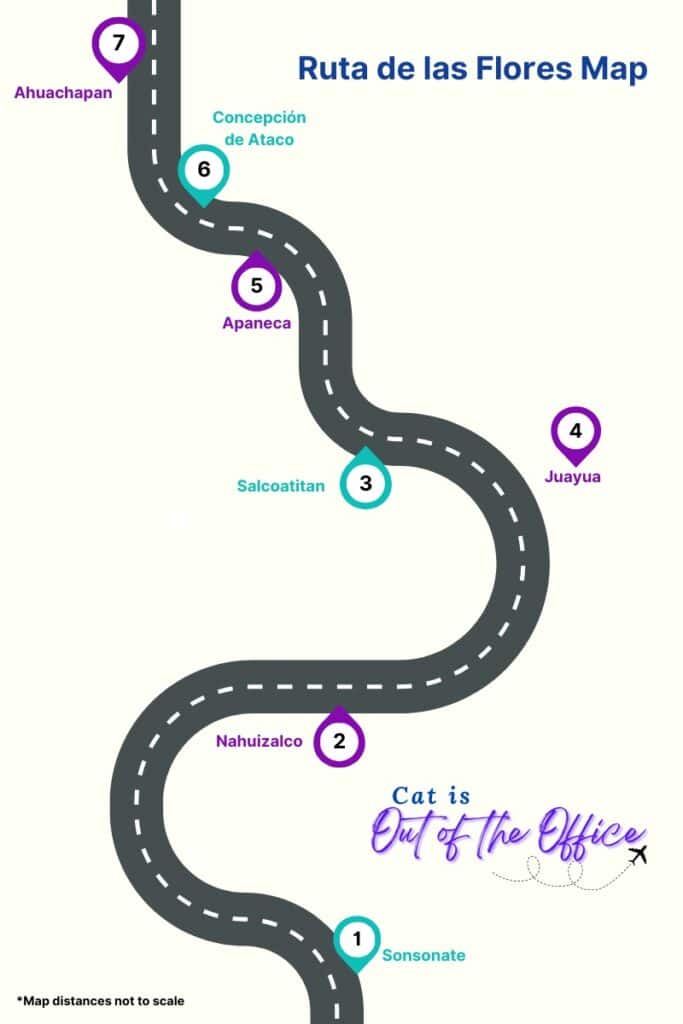
Ruta de las Flores officially begins in Sonsonate and ends in Ahuachapan, hidden in the lush Apaneca hills on the west side of El Salvador.
Juayua and Ataco are the most popular towns, so most travelers head there first and explore from there.
Whether you’re coming from Santa Ana, San Salvador, or El Tunco, I’ve got you covered with step-by-step instructions for how to get to Ruta de las Flores.
Flower Route By Chicken Bus:
Hop on a chicken bus to Ruta de las Flores for an authentic and lively ride that can be unpredictable but fun. Catching these local buses requires patience and a sense of adventure (and sometimes help from the locals and drivers who can guide you along the way).
If you travel to Ruta de las Flores via chicken buses, buffer extra time into your itinerary. Even though they drive faster than I would expect, the trip to Ruta de las Flores took longer than I expected.
Flower Route By Car:
On the other hand, driving yourself offers more flexibility and control over your schedule. You can rent a car or hire a driver/taxi.
Driving in El Salvador is fairly easy, though I recommend sticking to daytime driving.
🚗 When I book rental cars online, I recommend and use Discover Cars. They have the best deals! And what’s more, they provide FREE cancellations up to 48 hours before your reservation.

Bus From Santa Ana to Ruta de las Flores
Take Bus #238 from Santa Ana to Juayua – it costs about $0.80 USD and takes 1.5 hours.
Santa Ana to Juayua Bus Schedule:
- First Bus 6:40am (Gasolinera #1)
- 9:40am (Terminal)
- 11:45am (Terminal)
- 1:45pm (Terminal)
- 3:45pm (Terminal
- 5pm (Terminal)
- Last Bus 6:30pm (Terminal)
Note: These times were accurate when I posted them, but it’s always smart to double-check with your accommodation or at the bus station in case something has changed.
Alternative route:
Take Bus #210 from Santa Ana to Ahuachapan – it costs about $0.75 and takes 1.5 hours.
Transfer across the roundabout to a Juayua or Apaneca microbus (tell the driver you’re going before getting on).
Bus From San Salvador to Ruta de las Flores
Take Bus #205 to Sonsonate – it costs about $0.75 and takes 1.5 hours.
Transfer to Bus #53D ($0.50-1.50) to Nahuizalco or Bus #249 to Juayua and Concepcion de Ataco.
Bus From El Tunco/El Zonte/La Libertad to Ruta de las Flores
Take Bus #287 to Sonsanate, which leaves La Libertad twice daily at 6am and 1:30pm – it takes about 2.5 hours and costs $ 1.50 USD. If you’re picking the bus up in El Tunco or El Zonte, it arrives about 15-20 minutes after leaving La Libertad.
Transfer to Bus #249 from Sonsanate to Ahuachapan (get in line with the locals, it gets busy). This local bus runs every 30 minutes and stops at every town along the Ruta de las Flores, costing about $0.50 USD.
17 Things to Do in Ruta de las Flores
The “Flowers Route” takes you through seven small towns: Sonsonate, Nahuizalco, Salcoatitan, Juayua, Apaneca, Concepcion de Ataco, and Ahuachapan.
While each village has its unique appeal, some of the towns have more going on than others. Most travelers start at Juayua, arguably the most popular stop along the Ruta de las Flores, known for its picturesque views and thrilling Seven Waterfalls Hike.
Another popular village to base yourself in is Ataco, nicknamed the “Mural Village” for its vibrant street art.
As you journey along the Ruta de las Flores, you’ll encounter hot springs to soak in, ziplines for some adrenaline rush, and even a maze to test your navigational skills.
And don’t forget to feast your eyes on the stunning valley views from the viewpoints scattered along the main road near Apaneca and Juayua.
So buckle up and get ready for an unforgettable journey through the Ruta de las Flores!

Juayua: Things to Do
Juayua, aka “River of Purple Orchids” in the local Nahuatl language, is a great place to base yourself as you explore the Ruta de las Flores. It’s the most popular town in the area and has some of the best accommodation options.
1. Admire the Views
About 3km South of Juayua (after the turnoff towards Nahuizalco), you’ll notice a “mirador” or viewpoint. It’s worth pulling over if you can do so safely!
2. Feria de la Gastronomia (Food Festival)
Eat with the locals at the food festival that sets up every weekend outside the church (where they worship Black Christ). You’ll find all sorts of dishes, from seafood to meat skewers to sausages to pupusas. If you try the rabbit (conejo), let me know how you liked it!

3. Hike the Seven Waterfalls of Juayua (Siete Cascadas)
Take a guided tour through the jungle and coffee fields to explore the 7 waterfalls of Juayua. This thrilling 6km trek (2.5-4 hours) is incredibly challenging and sometimes dangerous during the rainy season (I learned the hard way), so it’s best to go when it’s dry.
Using ropes, you can do light rappelling down the waterfalls and free climb up some of them. It is important to have a guide for security as there have been instances of tourists being targeted in robberies (but don’t worry, Ruta de las Flores is one of the safest regions of El Salvador).
November – the start of the dry season – is the best time to witness the waterfalls in their full glory.
I booked my hiking tour directly with Elizabeth Hernández from Gaviotita Tours Adventura. She’s a fantastic local guide in Juayua, offering the Seven Waterfalls Tour. She charges only $ 20 USD. Contact her on Whatsapp (+503 6113 7277) or via Facebook and Instagram for more info.

4. Visit Los Chorros de la Calera (One of the Seven Waterfalls)
If you don’t have the time (or the energy) for the complete Seven Waterfalls Hike, walk to waterfall #7: Los Chorros de la Calera. It’s just 2km (about 20-minute walk) from Juayua to the waterfall.
You can take photos, swim in the pool, and enjoy the beautiful surroundings. The local police offer free escorts for tourists due to some robbery incidents. On weekends, after 10/11am, the police patrol the area anyway, making it a convenient time to visit.
Hiring a local guide is also affordable, around $20 USD, and a great way to support the community.
5. Visit the Local Market
The main market in Juayua, not too far from the Food Festival, is a great place to experience the local culture and pick up some souvenirs. You’ll find fresh produce, handmade crafts, traditional clothing, and more.
5. Eat Pupusas
Pupusas are my favorite street food in Latin America, so there’s no way I am leaving them off my list of things to do in Ruta de las Flores! I thoroughly enjoyed the pupusas at Pupusería Y Taquería Doña Cony and Pupusería Esmeralda.
6. Visit Laguna de las Ranas (Frog’s Pond)
There’s not a lot of info online about Laguna de las Ranas (the beautiful of a not-yet-discovered location!), but ask around and hire a local guide to bring you there. It looks like a beautiful off-the-beaten-path place for a forest walk. Combine with a hike through the orange trees.
Concepción de Ataco: Things to Do
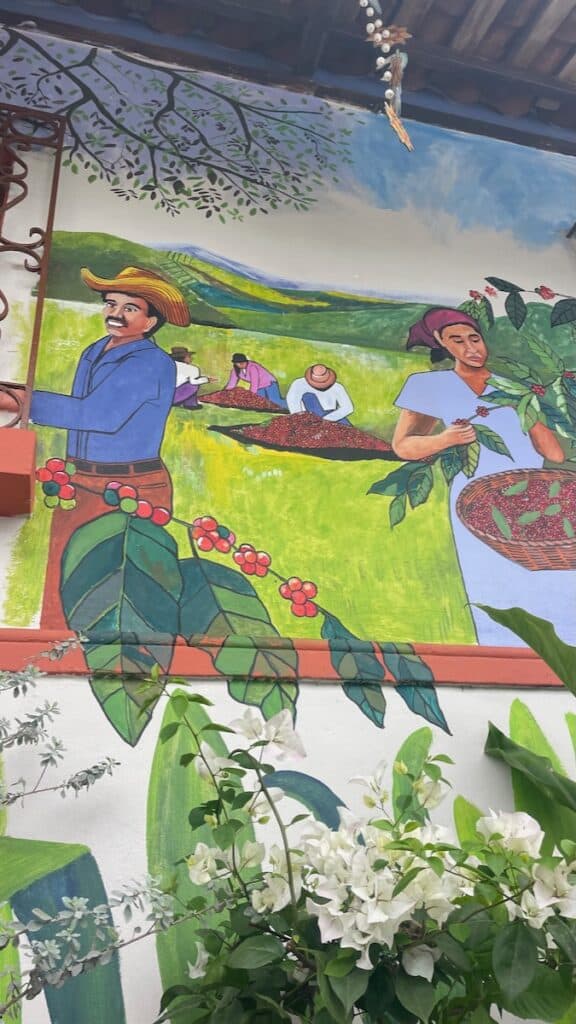
Ataco is the second-largest Ruta de las Flores town and one of the most popular. Many travelers choose to stay overnight here since it has some good accommodation options. Like all the towns, it stays pretty quiet during the week and comes to life more on the weekends.
7. Visit Finca El Carmen Coffee Plantation
Coffee lovers won’t want to miss a visit to Finca El Carmen Coffee Plantation. Here, you can take a tour of the plantation to learn about the history of coffee production in El Salvador and see how the beans are grown, harvested, and processed – for just $6 USD!
This highly rated Ruta de las Flores tour includes stops in four of the towns and a visit to a coffee farm, plus transportation to and from San Salvador! I love that it maxes out at 6 guests.
👉 My top pick for the best Ruta de las Flores small group tour is the Thermal Tour: Café Albania + Hot Springs + Ataco + Lunch, with a near-perfect 5-star rating. You’ll visit Salto de Malacatiupan waterfalls, Santa Teresa Hot Springs, hop a bike zipline, and more!
8. Explore the Colorful Murals & Shop for Handicrafts
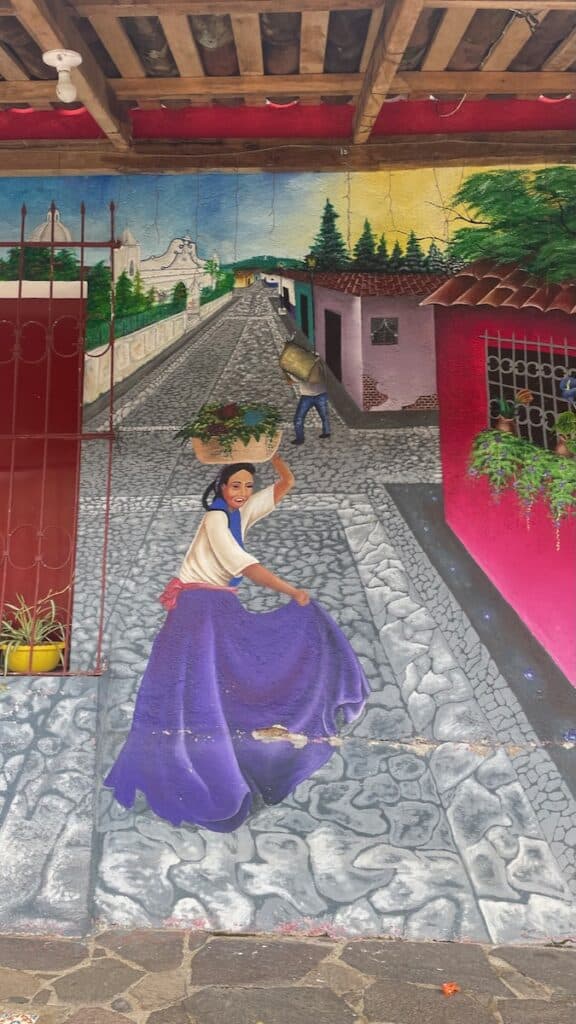
Ataco is known for its vibrant street art and murals and its thriving community of artisans, chefs, and artists who have opened craft stores, galleries, restaurants, and looms.
Axul Artesanías is a must-stop for locally crafted souvenirs and fabrics made from looms in-house – it’s also a delicious cafe!
Stroll through the town to discover these captivating pieces of art on walls, buildings, and even staircases, each with its own unique style and story to tell.
Don’t miss the Central Park (Fray Rafael Hernandez Park) and look at the church, city hall, cafes, and antique shops. Stop by the arts and crafts shops, where you can find sculptures, ornaments, clothes, antiques, and candles.

9. Hike to Mirador de la Cruz
For a stunning panoramic view of Ataco and its surrounding countryside, take a short hike up to Mirador de la Cruz. It is located just outside of town, above the church at the south end, and offers a picturesque spot for photos and relaxation, especially at sunset.
On clear days, you can see all the way to the Pacific Ocean from this lookout point. Take some time to appreciate the colorful houses, rolling hills, and lush forests of this charming region.
Sadly, the trail was closed due to mudslides when I visited, so I’ll have to return!
Another incredible viewpoint is the hidden gem Finca y Mirador La Providencia. It’s a private property that charges $0.50 to enter.

10. Indulge in Local & International Cuisine
Ataco is known for its delicious food, especially pupusas at Pupusa Primavera and Pupuseria Cielito Lindo.
Cielito Lindo is most famous for selling Tenquiqe mushroom pupusas, a local delicacy known as the “Salvadorian truffle” that can only be found in El Salvador.
Other popular restaurants are El Brasero de Ataco (grilled meat), Xochikalko Restaurante (local food), and Taqueria Cachinflin (the best Mexican food in town).
Geko’s Coffee is a great place to try award-winning coffee and desserts and to people-watch.

11. Relax in Santa Teresa Hot Springs (Termales de Santa Teresa)
Visit this El Salvador hot spring located on the edge of the Apaneca mountain range, just a couple kilometers from Ahuachapan and about 20 minutes drive from Ataco.
It offers 30 natural thermal water pools, trails, swimming pools, and Central America’s largest hot water geyser!
For just $10 per adult ($5 per child), you can enjoy all the pools, chairs, tables, and a small shower changing room until 9:30 pm. Spa treatments like massages, mud scrubs, and saunas are available.
Apaneca: Things to Do
Apaneca, neighboring Juayua, is a cute little town with cobblestone streets, colorful murals, charming coffee shops, and beautiful views of the surrounding mountains.
12. Admire the Views
There’s another viewpoint off the main road, about 1km south of Apaneca – take a peek if you can pull over safely!
13. Maze, Bicycle Zipline, and Rainbox Slide
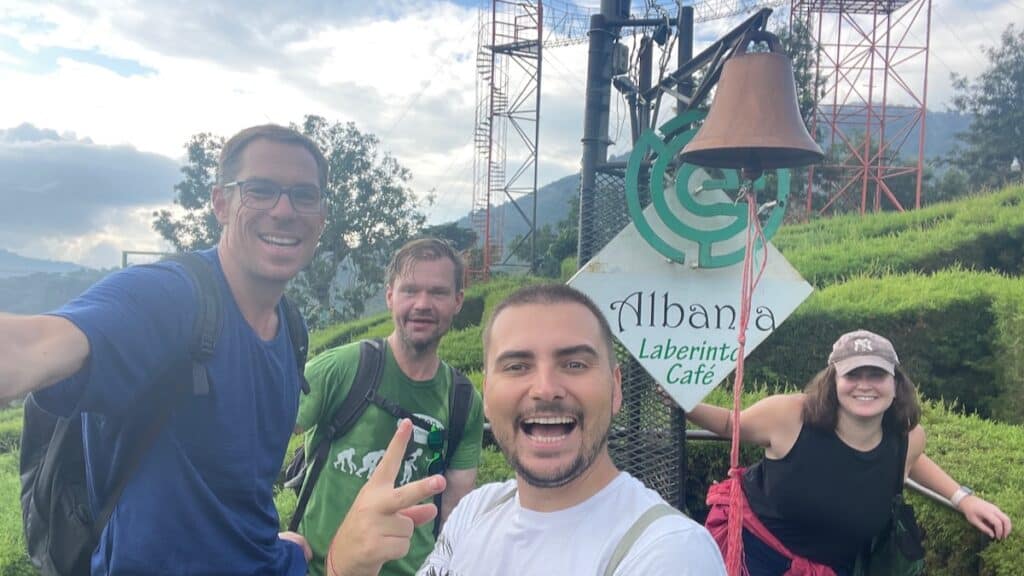
Cafe Albania, located on the outskirts of Apaneca, is a must-visit for adventure enthusiasts. This popular spot offers a range of thrilling activities, including a tall swing, a maze made from natural hedges, a surf zipline, a bicycle zipline, and a rainbow slide.
I had a blast here with three guys from my hostel. We split into two teams and competed in the maze (I won, of course!). Finding our way out of the labyrinth was much harder than it looked!
Afterward, we enjoyed watching others take on the zipline and tightrope bicycle while sipping coffee at the cafe. It was even more fun than I expected!
If you want to visit as a day trip, this private tour includes transportation to/from major cities to Cafe Albania.
👉 Check out this popular Day Tour that includes the Santa Teresa Hot Spring, Cafe Albania Bike Zipline, and visiting the village of Ataco.

14. ATV Ride to Laguna Verde (The Green Lagoon)
Laguna Verde (5km from town) is a small scenic lagoon and one of the top attractions in Apaneca. It’s popular to take this ATV tour of the town and lagoon.
There wasn’t a lot going on there when I visited Laguna Verde, but I’m guessing that’s because it was the peak of the rainy season.
Laguna las Ninfas is another lagoon in the area worth visiting.

Other Things to Do in Ruta de las Flores
15. Salto de Malcatiupan Hot Spring (Ahuachapan)
A half-hour drive from Ahuachapan is the Salto de Malcatiupan hot springs. But it’s not just a regular hot spring – it’s a hot waterfall! Plus, it’s free to enter.
You can explore several waterfalls and visit towns along the Ruta de las Flores by booking a convenient day tour starting from San Salvador.
👉 Check out this popular Day Tour that includes the Santa Teresa Hot Spring, Cafe Albania Bike Zipline, and visiting the village of Ataco.
16. Enjoy the Shade of a 300-Year-Old Tree (Salcoatitan)
Located in the heart of Salcoatitan, you’ll discover a remarkable natural wonder – the La Ceiba tree. This ancient giant has been rooted in the soil for an impressive 300 to 400 years.
17. Discover the Hidden Charm of Nahuizalco (Nahuizalco)
Tucked away from the usual tourist trail, Nahuizalco offers a slice of authentic Salvadoran life on the Ruta de las Flores. It’s often overlooked due to its sleepiness, but it’s worth a visit if you’re seeking a genuine experience.
Grab a meal at Pupuseria Lucy – an acclaimed local eatery that serves up mouthwatering pupusas, the beloved national dish of El Salvador. If you’re around in the evenings, check out the town’s big night market.
Keep your ears open – the Nahuat language is still spoken here!
Bonus: Imposible National Park
If you want to hike, head 1.5 hours from Ruta de las Flores to Parque Nacional El Imposible. Many tourists go with a guide since the quality of the roads is poor, and finding your way around the park can be complicated. Ask your accommodation for up-to-date information.
Keep your eyes open – maybe you’ll spot El Salvador’s national bird!

Where to Stay on Ruta de las Flores
When it comes to soaking up the authentic Salvadoran vibe, nothing beats an overnight stay in Ruta de las Flores. Juayúa and Ataco are the most popular places to stay.
These towns not only serve as excellent bases for exploring the route but also provide the best lodging options.
Expect everything from quaint bed-and-breakfasts nestled amidst coffee plantations to luxe boutique hotels that promise comfort with a touch of opulence.
Note: “Hostal” in Spanish doesn’t translate to a “backpacker’s hostel” – the word typically means it’s an affordable hotel.
Where to stay in Juayua
🛏️ Hostal Doña Mercedes: One of the area’s only hostels with dorm rooms – perfect for backpackers. Features a dining area and a fully equipped shared kitchen for cooking. Enjoy a wonderful breakfast, free purified water, and an excellent location with common areas for socializing. Additional services include motorbike rental and laundry facilities. Check Reviews and Rates.
🛏️ Samay Hostel: A lively option for those seeking a social atmosphere, this hostel also offers dorm rooms catering to solo travelers and backpackers. There’s an abundance of bathrooms, a stunning rooftop area, and a well-equipped kitchen with everything you need to whip up a meal. The only minor drawback is the 10-minute uphill walk back from town – but think of it as your daily fitness routine! Check Reviews and Rates.
🛏️ Bourbon Hostal: Sitting near the Bus #249 stop, it’s an ideal base to set off on your Ruta de las Flores explorations. Experience unrivaled hospitality with stunning city views, modern rooms, delicious breakfast served at their stunning rooftop cafe, bilingual staff, and convenient airport shuttle service. Check Reviews and Rates.
🛏️ Hostal Deyluwin: Welcome to this tranquil guest house with inner courtyard views. Enjoy the comfort of air-conditioning and the convenience of an easy walk into the center of town. The shared kitchen with a full-size fridge lets you keep everything you need on hand. While breakfast isn’t available, you can easily prepare your own meals. And the beds are comfy, too! Check Reviews and Rates.
🛏️ Hotel Juayua: This small boutique hotel has a swimming pool and breathtaking volcano views. Enjoy the comfort of air-conditioning and the convenience of an on-site restaurant. While it may be pricier than other options, their outstanding staff will ensure an unforgettable stay. Check Reviews and Rates.
Where to stay in Ataco
🛏️ Hotel Casa Pino: Each room is equipped with a kitchen and private bathroom, giving you the comforts of home while on vacation. Located just a few miles from El Imposible National Park, its location ensures you’re never too far from an adventure. Despite being slightly pricier than other properties in Ruta de las Flores, the clean and comfortable accommodations make it worth every penny. Check Reviews and Rates.
🛏️ Casa de Mafer Hostal y Cafe: This perfectly located guest house offers breathtaking views of the nearby volcano. Each room has a private bathroom with hot water for your comfort. The property is affordable for solo travelers and has a charming vibe with beautiful plants and artwork. Some rooms are upstairs, so you may need to climb the stairs to your cozy room. Check Reviews and Rates.
🛏️ Las Casitas Hostal: This charming guesthouse puts everything within your reach. You’ll love its tranquil garden – an ideal spot for unwinding after a day of exploration. Its friendly and bilingual owner is always eager to help, enhancing your stay with warm hospitality. Start your day on a delicious note with their healthy home-cooked breakfast featuring fresh bread and delectable coffee. However, be aware that the wifi connection can get temperamental during windy conditions, especially in the rooms. Check Reviews and Rates.
🛏️ Hostal Juarez: Just a few minutes’ walk from the center of town. Hostal Juarez’s exceptional breakfasts and promise of hot showers add an extra layer of comfort to your stay. To cater to those road-tripping around Ruta de las Flores, the hostel ensures secure parking for peace of mind. Check Reviews and Rates.
🛏️ Casa Degraciela Boutique Hotel: This stunning hotel is an oasis of luxury for travelers who wish to splurge a bit. Every room offers a serene garden view, providing a tranquil backdrop to your stay. Start your day with their outstanding complimentary gourmet breakfast. The hotel’s exceptional service ensures your every need is catered to, while the games room provides an added touch of fun. Check Reviews and Rates.

Final Thoughts: Is the Ruta de las Flores worth visiting?
Yes! Ruta de las Flores, El Salvador, is one of those hidden gems you’ll be thrilled to discover before it hits the mainstream.
If you have time in your El Salvador itinerary, spend at least 1 night staying in Juayua or Ataco and explore the towns from there.
I took the chicken bus from Santa Ana to Juayua for the weekend food festival and knew I had to come back. So, a few days later, I rented a car with some friends from my hostel, and we explored the whole region.
The Seven Waterfalls Hike in Juayua is one I’ll never forget! Make sure you take time for a coffee plantation tour, too.
I know planning a trip can feel overwhelming. You’re probably thinking about logistics, getting around, ensuring you don’t miss out on any must-sees… but guess what? That’s where these highly-rated tours come in handy. They’ve got everything covered so that you can relax and soak in all the beauty that Ruta de las Flores has to offer.
Read More About El Salvador:
- Ultimate 1 Week El Salvador Itinerary for Adventurers
- El Salvador Solo Travel: A Solo Female Traveler’s Guide
- Ultimate Travel Guide to Backpacking El Salvador
- Is El Salvador Safe? + 21 Safety Tips for Travelers
- Ruta de Las Flores: Ultimate Travel Guide + 17 Things to Do
- Ultimate Ruta de Las Flores Itinerary for 1-3 Days
- 3 Best El Salvador Hot Springs: Everything You Need to Know
- 10 Stunning Waterfalls in El Salvador that You Must See
- What is the El Salvador National Bird? + 11 Interesting Facts
- 13 Best El Salvador Tours You Can’t Miss
- Ultimate Guide to Renting a Car in El Salvador
- Best Time to Visit El Salvador for Outdoor Fun!
- Backpacker’s Guide to Chicken Buses in Central America
- San Salvador to Copan Ruinas via Bus: Easy Instructions
- 11 Delicious Fruits in El Salvador You Must Taste at Local Markets
- Is El Salvador Worth Visiting? + 15 Pros and Cons
- Best Ruta de las Flores Tours from San Salvador
- Seven Waterfalls Hike El Salvador: Epic Juayua Adventure
- Juayua Food Festival Guide (by a Food-Obsessed Traveler)
- Is Santa Ana El Salvador Safe?
📝 El Salvador Travel Planning Guide 🇸🇻🌟
Before you embark on your unforgettable journey to El Salvador, here are the essential tips every traveler should know:
🚑 Should I buy travel insurance for El Salvador?
✅ 100% YES! — My #1 Safety Tip for all travelers is to buy travel insurance for every trip in case anything happens on their visit. I recommend and use SafetyWing – it’s cheap and comprehensive.
🛟 Is El Salvador safe for tourists?
✅ YES, El Salvador is generally safe for tourists, but there are some areas to avoid. Ask your hotel for the most up-to-date information before heading out. When you’re out, stay alert, stick to busy streets, and avoid isolated areas. Read more about staying safe in El Salvador.
💧Can you drink the water in El Salvador?
🚱 No — It’s recommended to drink filtered or bottled water in El Salvador (but using tap water to brush your teeth is usually fine). I recommend this reusable water bottle! It works great, turning tap water into safe-to-drink water that tastes good.
🚙💨 Is it safe to rent a car in El Salvador?
Yes — Renting a car in El Salvador is one of the best ways to see the country! I recommend Discover Cars, which checks both international companies and local Salvadoran companies, so you get the best rates.
🏩 What’s the best way to book my El Salvador accommodations?
My go-to for El Salvador hotels is Booking.com. For hostels, I use HostelWorld. Or get free accommodations with Trusted Housesitters!
✈️ What’s the best site to book El Salvador flights?
For finding cheap El Salvador flights, I recommend CheapOAir.
🎫 Do I need a visa for El Salvador?
Likely Not — El Salvador allows visitors from close to one hundred jurisdictions to visit El Salvador without a visa and stay for up to 180 days. US passport holders don’t need an El Salvador visa for stays of up to 90 days, but you must purchase a tourist card for $12 USD upon arrival.
💰 𝗖𝘂𝗿𝗿𝗲𝗻𝗰𝘆: The currency here is the US Dollar, and there are plenty of ATMs if you need cash. I always withdraw from ATMs to get the best rates (select “no” when it asks you if you accept the conversion rate). Credit cards aren’t commonly accepted outside of major cities.
🪙 Tipping: Tipping 10% in restaurants is expected, but make sure it’s not already included in your bill as “servicio.”
🚕 𝗧𝗿𝗮𝗻𝘀𝗽𝗼𝗿𝘁𝗮𝘁𝗶𝗼𝗻: Getting around El Salvador is a breeze! Uber is safe and cheap in major cities like San Salvador and Santa Ana. Local buses are generally efficient and easy to use. Renting a car is also a good option.
🗣️ Language: Many locals don’t speak English, so brush up on your Spanish! It can also be helpful to download the Spanish language option on Google Translate if you’ll be offline.
📶 𝗖𝗼𝗻𝗻𝗲𝗰𝘁𝗶𝘃𝗶𝘁𝘆: El Salvador has inconsistent internet connectivity – it’s better in the main cities than in rural areas.