
Thailand Vs Vietnam: Choose Your Next Destination Wisely
Cat is Out of the Office contains affiliate links and is a member of the Amazon Services LLC Associates Program. If you make a purchase using one of these Amazon links, I may receive compensation at no extra cost to you. See my Disclosure Policy for more information.
At some point, every traveler to Southeast Asia has to make the impossible decision: Thailand vs Vietnam.
The FOMO is real – how are you supposed to choose?
I’ve spent a solid 11 months (so far!) eating my way across Thailand and Vietnam, so I’ve got a good grasp on what sets these two apart.
Thailand and Vietnam are famous for their jaw-dropping landscapes, rich cultures, and delicious food, not to mention they’re both easy on the wallet.
Both countries are fantastic, but my overall pick is Thailand – I love the diversity of street food, the lush mountains in the north, and the incredible scuba diving in the south.
Vietnam’s not far behind! I’ll never forget my motorbike tour of the Ha Giang Loop or boat tour of the stunning Halong Bay. (I am still trying to forget how hard the Visa process was, though.)
So, let’s explore what makes each country a worthy contender for your next big trip so you can start planning!
✈️ Search for cheap flights to Thailand here.


Similarities Between Thailand and Vietnam
First, let’s talk about how these two incredible Southeast Asian destinations are alike.
No matter which one you choose to head to next, you will enjoy rich cultures, diverse landscapes, and delicious food.
If you’re looking for adventures, you can’t go wrong with either Thailand or Vietnam.
Due to their large sizes, exploring different regions within these countries often requires long bus, train, or plane journeys, which can be an adventure, so keep that in mind when planning your itinerary.
Both countries are tourist-friendly and welcoming to solo travelers, with plenty of accommodations and tours.
They both have their versions of floating markets and night bazaars, too!
There’s something about Thailand, though, that keeps me wanting more. And I’m not the only one who agrees–Vietnam’s tourist return rate is 5%, but Thailand’s is a whopping 50%!

What Sets Thailand Apart?
- Visa Ease: Unlike Vietnam, where a visa must often be arranged in advance, Thailand offers a visa-on-arrival for citizens from 56 countries, including Australia, Austria, Canada, France, Germany, Norway, the USA, and the UK, making entry much smoother and quicker. Getting a 30-day visa extension or doing a “border run” is pretty easy if you need more time.
- Welcoming Culture: Thailand’s nickname, the “Land of Smiles,” reflects its friendly and hospitable culture. I also felt welcomed in Vietnam, but some of my friends felt their reception there was more reserved. I don’t know why, but I’ve found it a lot easier to make friends with other travelers in Thailand, too.
- Superior Beaches: It’s no secret that Thailand has some incredible beaches. Travelers flock to islands like Phuket, Koh Samui, and Koh Phi Phi to soak up the sun and enjoy the crystal-clear waters. Vietnam also has lovely beaches in some parts of the country, like Danang.
- Transportation Options: Getting around Thailand is incredibly convenient – you can easily hop on a bus or train from city to city. Vietnam also has an extensive transportation network, but I found it was sometimes more work to figure it out. Crossing the street in Vietnam is terrifying, and you won’t catch me riding a scooter in Vietnamese cities.
- Food Scene: Thai street food offers a variety of flavors that are generally more diverse than Vietnamese cuisine. Some of my favorites are spicy Tom Yum soup, green curry, and papaya salad. During my three months in Vietnam, I ate nothing but noodles and Banh Mi sandwiches. If you don’t love spicy food, you’ll probably prefer Vietnamese food over Thai!
- Digital Nomad Friendly: Thailand currently attracts more digital nomads than Vietnam, offering a wider range of modern coworking spaces, especially in cities like Bangkok and Chiang Mai. Although I found some good coworking options in Da Nang, there were fewer in Hanoi. Both countries have plenty of cafes with free Wi-Fi, making them suitable for remote work. I expect Vietnam’s digital nomad community will grow as it develops more facilities catering to this lifestyle.
- Cannabis Culture: Thailand has become more progressive with its stance on cannabis, having decriminalized marijuana, which led to tons of shops popping up all over touristy areas. It’s not really my thing, but if it’s yours, you’ll prefer Thailand over Vietnam.
- Slightly More Expensive: I find Thailand slightly more expensive (still very affordable) than Vietnam. Think as little as $20 USD per day for hostels and street food, with a little extra for drinking and sightseeing. Plus, whatever you need to get around. I like a little more ease and comfort on my travels, so $35-65 per day is plenty for me, not including high-ticket purchases like scuba diving and flights.

What Sets Vietnam Apart?
- Challenging Visa Process: Unlike Thailand’s visa-on-arrival, getting into Vietnam is more complicated. Only 22 countries, including the UK, France, Italy, and Germany, are granted visa-free entry. For those coming from the USA, Canada, Australia, and around 80 other countries, applying for an e-visa online in advance is necessary. I got lucky and was one of the first travelers to enter Vietnam on the new 90-day visa, but I had a terrible time getting in since my middle name was left off. I had to pay a lot of money for a visa agent to help me correct the mistake.
- Adventurous Feel: Vietnam offers a raw and immersive experience that’s harder to find in Thailand’s well-beaten paths. Activities like motorbiking the Ha Giang Loop offer a level of adventure and authenticity that is unique within the region. Vietnam feels more authentic since it’s less influenced by Western culture (for now).
- Dramatic Natural Beauty: Vietnam’s landscapes, such as Halong Bay and the terraced fields of Sapa, offer a different type of beauty that’s less about pristine beaches and more about rugged, dramatic scenery. You can find gorgeous landscapes in Thailand, too, of course.
- Culinary Authenticity: Vietnamese cuisine offers unique French influences not found in Thai Cuisine, such as the ubiquitous Banh Mi, which showcases Vietnam’s colonial history in its flavors. Vietnam definitely does bread better than Thailand! The wine was much cheaper and better quality, too. And nobody does noodle soups better than Vietnam, except for maybe Khao Soi in Chiang Mai.
- Cost Effectiveness: Traveling in Vietnam tends to be cheaper than in Thailand, especially when it comes to daily expenses, although both are very affordable compared to North America and Europe. Accommodations, meals, and transportation can be significantly less expensive, allowing for a longer stay on a smaller budget. I found it hard to spend more than $35 USD per day living in Vietnam, so long as I ate local food.
- Tailoring and Custom Clothing: Vietnam is famous for its many skilled tailors, particularly in places like Hoi An, where custom clothing can be made quickly and affordably. I had seven different items tailored for me there and wished I had more room in my backpack for additional pieces. While Thailand also offers tailoring services, they are less common than in Vietnam. I’ll literally plan a trip back to Vietnam solely to have more custom clothing made!
- Easy-Rider Motorbike Tours: One of the unique offerings in Vietnam is the availability of easy-rider motorbike tours, where travelers can explore regions like the Hai Van Pass or the adventurous Ha Giang Loop with an experienced local driver. This option provides an excellent opportunity for those not comfortable driving a motorbike to enjoy the thrill and scenic beauty of Vietnam’s famous routes. While Thailand also has incredible motorbike loops, they typically do not offer easy-rider tours.
- Prevalence of Smoking: In Vietnam, smoking cigarettes is much more common and culturally ingrained. I’m not a fan of breathing in cigarette smoke, so I didn’t like this about Vietnam.

Top Places to Visit in Thailand:
North Thailand
- Chiang Mai – My part-time home! Known for beautiful temples, close proximity to nature, and ethical elephant sanctuaries. The night markets are fantastic for shopping and local cuisine. I love exploring the mountainside, and Chiang Mai makes the perfect base.
- Pai – A relaxed mountain town with hot springs, waterfalls, and hiking opportunities, perfect for nature lovers. It has hippie vibes, is a favorite among backpackers, and it’s gorgeous! If you’re spending time in Northern Thailand, consider adding a couple of nights in Pai–it’s a few hours of hairpin turns from Chiang Mai.
- Chiang Rai – Home to the unique White Temple and close to the Golden Triangle, offering a quieter experience with rich cultural heritage. I’m embarrassed to say that I’ve yet to visit Chiang Rai even though I’m living quite close by in Chiang Mai. It’s on my list!
Central Thailand
- Bangkok – Most international flights land in Bangkok, so there’s a good chance you’ll spend at least a day or two here before heading somewhere else. Bangkok is a huge city with some incredible street markets and nightlife, plus famous landmarks like the Grand Palace.
- Ayutthaya – Explore the ruins of this ancient capital, a UNESCO World Heritage site, just a short train ride from Bangkok. You’ll feel like you’re walking through an Indiana Jones movie and get some incredible pictures.
South Thailand
- Phuket – To be honest, I’m not much of a Phuket fan. I’ve been several times now and think it’s my least favorite of all the Thai islands. But it’s easy to get to, and a lot of travelers love it! Phuket is famous for its beaches, nightlife, and as a jumping-off point to the beautiful Phi Phi Islands and the diving paradise of the Surin Islands.
- Krabi – Known for its stunning beaches and access to islands like Koh Lanta and Koh Phi Phi. It’s a hotspot for rock climbing and snorkeling, and it gets busy. Koh Lipe, still relatively unspoiled by mass tourism, is about 4 hours away from Krabi Town.
- Koh Samui – Offers palm-fringed beaches, luxury resorts, and is a gateway to the nearby scuba diving havens of Koh Tao and the party favorite Koh Phangan. I love these three islands and would choose them over Phuket any day. Koh Tao is small and famous for being one of the cheapest places to get scuba certified in the world (I got mine at Roctopus Dive).
- Khao Sok National Park – This was one stop in Thailand that I wish I spent longer than one night. Known for its dense jungle, limestone karsts, and the stunning Cheow Lan Lake. It’s an adventure spot for hiking, wildlife spotting, and staying in floating bungalows. I did some really cool jungle and cave hikes here!
👉 One of my favorite ways to learn about local food and fruit when I’m traveling is to take a food tour or cooking class. Tours are a really fun way to meet other travelers, and I find food tours to be more social than other types of tours.🧑🍳🥘🍜🍡🌶️


Top Places to Visit in Vietnam:
North Vietnam
- Hanoi – The cultural capital with a blend of Southeast Asian, Chinese, and French influences. Don’t miss the Old Quarter and the city’s famous street food. I spent about a month in Hanoi, using it as a base for exploring other parts of North Vietnam. It’s very busy and hectic–you’ll definitely feel like you’re in Vietnam!
- Halong Bay – A must-visit UNESCO World Heritage Site, famous for its emerald waters and thousands of limestone islands. One of my favorite stops in Vietnam was the 2-night cruise I did with Indochina Junk. The ship took us to nearby Bai Tu Long Bay, which looks just like Halong Bay but way less crowded.
- Tam Coc – Often referred to as the “Halong Bay on land,” Tam Coc is a stunning area in Ninh Binh province known for its dramatic landscape of limestone cliffs and serene rivers. You can take a peaceful boat ride through caves and rice paddies, a perfect way to experience rural Vietnam’s beauty. It’s a serene escape from the more tourist-packed sites and offers some of the most picturesque countryside scenes in the country.
- Ha Giang Loop – Offers a rugged and breathtaking motorbike journey through northern Vietnam’s mountainous region, renowned for its dramatic landscapes and cultural richness. This was definitely a highlight of my 3 months in Vietnam! Hiring an easy rider was a good call.
- Sapa – Famous for its terraced rice fields, breathtaking landscapes, and the opportunity to engage with local hill tribes. I didn’t do much hiking here, but there’s something magical about all the rice paddies covered in mist! Ha Giang was more beautiful to me than Sapa.
Central Vietnam
- Hoi An – Travelers are obsessed with this beautifully preserved Ancient Town covered with lanterns. If I’m being honest, I was pretty underwhelmed by Hoi An, but maybe that’s because it rained heavily the entire time I was there. I did get some beautiful custom-made clothes from Two Ladies Tailors, though!
- Da Nang – The perfect blend of big city and beach vibes. Offers beautiful beaches like My Khe, cultural landmarks such as the Marble Mountains, and modern sights like the Dragon Bridge. A short drive from Hoi An. I lived here for a month as a digital nomad, just four blocks from the beach, for about $12/day!
- Hue – Visit the Imperial City with its sprawling complex of historic architecture, a testament to its past as the national capital. I didn’t make it all the way to Hue city proper, but I explored the Hai Van Pass and countryside on a motorbike tour from Danang – beautiful!
South Vietnam
- Phu Quoc Island – Known for stunning beaches, snorkeling, and scuba diving, this island is a tropical paradise. Or so I’ve heard, I didn’t make it here yet!
- Mekong Delta – Explore the “Rice Bowl” of Vietnam on boat tours through floating markets and rural landscapes. I spent the night in a cool homestay and biked around the rural villages and visited local markets.
- Ho Chi Minh City (Saigon) – A dynamic city with historical sites like the War Remnants Museum and vibrant food scenes. I learned so much about the Vietnam-US War here, and I also went on a delicious food tour!
I had an unforgettable experience exploring the stunning Ha Giang Loop in Vietnam on a motorbike tour with an incredible “Easy-Rider” driving me. The breathtaking landscapes and scenic routes were absolutely incredible. Don’t miss out on this incredible adventure – book your own Ha Giang Loop motorbike tour!

Thailand vs Vietnam Side-by-Side Comparison
| Category | Thailand | Vietnam |
|---|---|---|
| Capital | Bangkok | Hanoi |
| Currency | Thai Baht (THB) | Vietnamese Dong (VND) |
| Language | Thai | Vietnamese |
| Popular Foods | Pad Thai, Khao Soi, Green Curry | Pho, Bun Cha, Banh Mi |
| Top Places to Visit | Bangkok, Chiang Mai, Phuket | Hanoi, Hoi An, Halong Bay |
| Cultural Highlights | Temples, Songkran Festival | Water Puppet Theater, Tet Festival |
| Beaches | Krabi, Phuket, Koh Samui | Da Nang, Nha Trang, Phu Quoc |
| Outdoor Activities | Scuba diving, snorkeling, hiking | Trekking in Sapa, Halong Bay cruises |
| Cost | Low, slightly higher | Low |
| Visa Requirements | Visa on arrival for many nationalities | Known for problems/delays |
| Transportation | Well-developed | Varied, with trains, buses, and motorbikes |
| Nightlife | Full-moon parties, famous night markets, backpacker streets | Lively street food scenes, backpacker streets |
| Safety | Generally safe for tourists | Generally safe for tourists |
| Shopping | Modern shopping malls, night markets | Local markets, tailor-made clothing |

Which is Cheaper: Thailand or Vietnam?
Both Vietnam and Thailand are incredibly wallet-friendly when it comes to the basics, like food, lodging, and getting around, but when comparing Thailand vs Vietnam, I find Vietnam to be a little cheaper overall.
You can manage on as little as $20 USD a day in either country if you stick to budget hostels and street food. This won’t cover high-ticket costs like scuba diving or internal flights.
If you’re like me and prefer a bit more comfort, you’ll spend a little more.
I find it hard to spend more than $35 USD per day in Vietnam, so long as I eat local food. I do splurge on a few pricier tours.
My average daily spend in Thailand is closer to $40-65 USD.
Hostels in Bangkok cost $9-20 USD for a dorm and $20-40 USD for a private room, whereas you can find dorms in Hanoi for $6-11 USD and private rooms for $20-35 USD on average. But you’ll find that the accommodations are generally nicer in Thailand than in Vietnam.
My apartment in Danang, Vietnam, just four blocks from the beach, was about $12 USD/night. My apartment in Chiang Mai, Thailand, with a pool and gym, was about $16 USD/night.
While living in Chiang Mai, Thailand, I rent a scooter for less than $3 USD per day (it costs $5 per day in Pai). I occasionally splurged on a high-quality sushi dinner for less than $30 USD–that’s a whole lot cheaper than back home!
Food is even cheaper in Vietnam if you can believe it! You can get a delicious bowl of Pho for less than $1 USD. It costs more or less the same as in Thailand to rent a scooter, depending on how long you rent it for and your haggling skills.

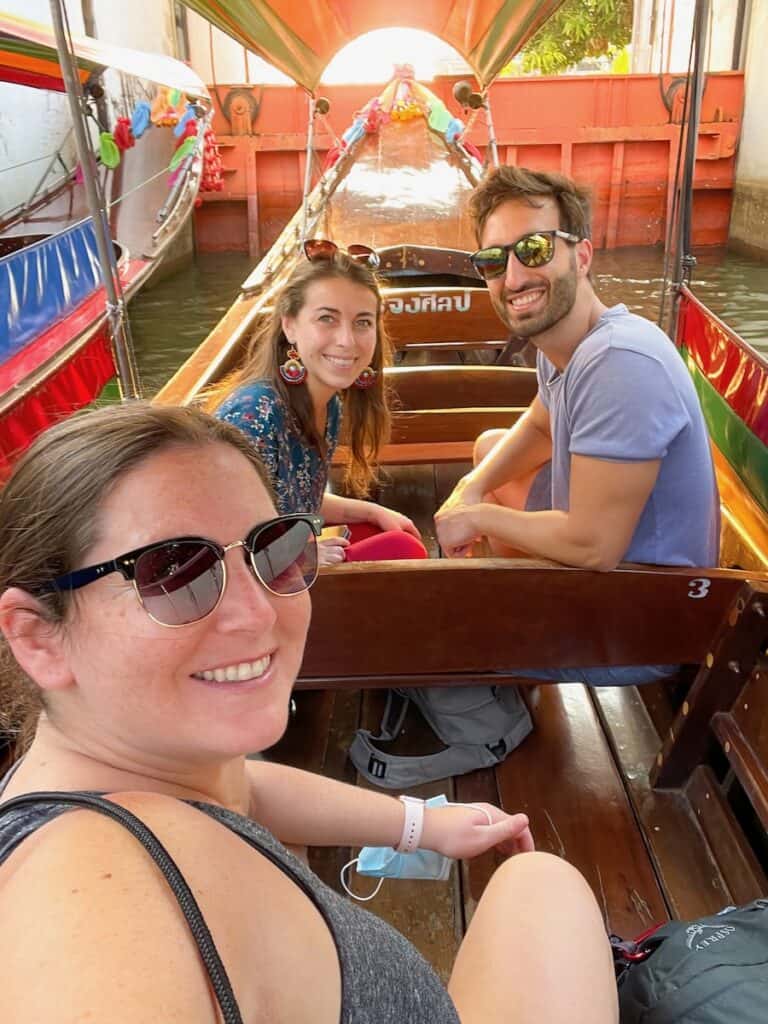
Hanoi vs Bangkok: Capital City Showdown
We’ve been talking about Vietnam vs Thailand in terms of the whole countries, but what about their capital cities?
Hanoi, Vietnam and Bangkok, Thailand are two of the most well-known cities in Southeast Asia – I’m lucky that I’ve spent significant time in both!
If we’re just talking just passing through, I like both cities about the same. But if I chose one to spend significant time in, I would choose Bangkok since it has more modern comforts, with the main downside being that it’s always hot in Bangkok, and sometimes cooler in Hanoi.
Hanoi, Vietnam’s capital, is a busy city full of ancient architecture, street markets, and lakeside cafes. It’s busy here–just crossing the street is an adrenaline rush. Every corner has a cafe, and every street is filled with good food. It still has that old-world feel, like you’re stepping back in time, a stark contrast to Vietnam’s most modern city of Ho Chi Minh (Saigon).
Some of the top things to do in Hanoi are to visit the Ho Chi Minh Mausoleum, take a motorbike tour that includes a visit to Train Street, explore the Old Quarter, and take a food tour. The city also has a vibrant nightlife scene with bars and clubs catering to both locals and tourists.
It’s easy to get from Hanoi to other North Vietnam highlights like Ha Long Bay, Ha Giang, Ninh Binh, and Sa Pa.
On the other hand, Bangkok, Thailand’s capital, is a huge metropolis known for its modern buildings, vibrant culture, delicious food, and lively nightlife. The buzzing streets are lined with colorful markets, ornate temples, and the constant hum of tuk-tuks and motorbikes zipping by.
The most popular things to do in Bangkok are to visit the Grand Palace, Wat Pho, and Wat Arun for a taste of Thai history and culture. You can shop in luxury shopping malls (with air-conditioning!) or at the giant Chatuchak Weekend Market. Don’t leave without tasting some of Thailand’s most famous street food!
It’s easy to get from Bangkok to the famous beach destinations of Phuket, Koh Samui, and Krabi. Ayutthaya is a short train ride away, while Chiang Mai is reachable by an overnight train or bus (or quick flight).
One of the main differences between Hanoi and Bangkok is their size–Bangkok is much larger, with a population of over 11 million, compared to Hanoi’s 5 million. This results in Bangkok having more diverse neighborhoods and districts.
In Hanoi, the preferred modes of transportation are motorbikes and buses.
Bangkok, in contrast, has an extensive public transport system, including the BTS Skytrain, MRT, and numerous bus services, making it relatively easy to navigate despite its size.
Hanoi has distinct winter and summer seasons, with a cold, dry winter and a hot, wet summer. Bangkok doesn’t–the city is hot and humid all year, with a rainy season from May to October that brings brief but heavy showers.
⭐️My pick for Best Bangkok Food Tour is this Bangkok Midnight Food Tour by Tuk Tuk with a near-perfect 5-star Rating.


FAQs About Thailand vs Vietnam Travel
Which is safer, Thailand or Vietnam?
Both Thailand and Vietnam are generally safe for travelers, including solo female travelers. Petty theft can occur, so it’s important to stay vigilant, especially in crowded areas. Road safety is a concern in both countries due to traffic conditions, especially for motorbikes.
Is Vietnam cheaper than Thailand?
Yes, Vietnam tends to be slightly cheaper than Thailand, especially when it comes to daily expenses like food, accommodation, and local transportation. For instance, a meal in Vietnam can cost as little as $1 USD, whereas in Thailand, it might start around $2 USD.
What is the best time to visit Thailand and Vietnam?
The best time to visit Thailand is from November to February, when the weather is cooler and dry. For Vietnam, it’s ideal to go from December to February for cooler temperatures in the north, and from February to April for the south to avoid the rainy season.
Is Thailand or Vietnam better for solo travel?
Both countries are great for solo travelers, including solo female travelers, offering welcoming backpacker communities, extensive hostel networks, and well-established tourist routes. Thailand might beat out Vietnam slightly due to its more developed infrastructure, making it easier to navigate and find English speakers.

Final Thoughts: Vietnam or Thailand?
While in a perfect world, all travelers would have time to spend in both countries, they often don’t and must pick one. Really, the question is, should you visit Vietnam or Thailand first?
You really can’t go wrong with either–both have stunning landscapes, mouth-watering cuisine, and are incredibly affordable.
But if I had to pick one, I’d lean towards Thailand. There’s something irresistible about the place that keeps pulling me back time after time.
What sets Thailand apart for me? It’s the ease of visa processes for starters. Unlike Vietnam, where you often have to arrange a visa well in advance, Thailand offers visa-on-arrival for many.
Thai culture is incredibly welcoming, too – they don’t call it the “Land of Smiles” for nothing. Plus, the islands are unbeatable. I also prefer Thailand’s variety in the food scene over the monotony of noodle soups on offer in Vietnam.
But it’s not just about the sights and flavors. Thailand’s transport system makes getting around super easy, which is a godsend when you’re trying to soak in as much as you can. For digital nomads like me, Thailand’s modern coworking spaces make it a great base to work and explore.
Vietnam is also an amazing country, with its raw beauty and adventurous feel—from motorbike tours in the Ha Giang Loop to the tranquility of Halong Bay, it offers an authenticity that’s hard to match. If you want to go somewhere less visited, that’s Vietnam.
As you plan your trip, choose your timing carefully, especially with Thailand. The weather here can swing from one extreme to another, and you’ll want to make sure it complements your travel vibe, whether you’re island-hopping or market-touring.
Read More About Thailand:
- Ultimate 14-Day Thailand Itinerary: 2 Epic Weeks in Thailand
- Bangkok vs Chiang Mai: Which Thai City Is Best for You?
- 3 Day Chiang Mai Itinerary: Solo Traveler’s Guide
- Ultimate Chiang Mai Travel Guide for Solo Travelers
- Ultimate Money Guide to Cash, Cards, & ATMs in Thailand
- Is Thailand Safe For Solo Female Travelers? + Safety Tips and Scams
- Caution: Avoid the Worst Time to Visit Thailand
- Do You Need a Motorcycle License in Thailand?
- 15 Must-Know Tips for Renting a Scooter in Thailand
- Best SIM Card in Thailand for Tourists
- Is There Uber in Thailand? Ultimate Ride-Sharing Guide
- Chiang Mai vs Chiang Rai: Which Is Better to Visit?
- 29 Delicious Thai Fruits You Must Try (And How to Eat Them)
- Extending Your Thailand Visa in 3 Easy Steps + Expert Tips
- Are Taxis Safe in Thailand? 21 Tips from a Local
- Thailand Vs Vietnam: Choose Your Next Destination Wisely
- How Long Does it Take to Get to Thailand?
- 37 Pros and Cons of Living in Chiang Mai (Expat Guide)
📝 Thailand Travel Planning Guide 🇹🇭🌟
Before you embark on your unforgettable journey to Thailand here are the essential tips every traveler should know:
🚑 Should I buy travel insurance for Thailand?
✅ 100% YES! — My #1 Safety Tip for all travelers is to buy travel insurance for every trip in case anything happens on their visit. I recommend and use SafetyWing – it’s cheap and comprehensive.
💧Can you drink the water in Thailand?
🚱 No — It’s recommended to drink filtered or bottled water in Thailand (but using tap water to brush your teeth is usually fine). I recommend this reusable water bottle! It works great, turning tap water into safe-to-drink water that tastes good.
🚙💨 Is it safe to rent a car in Thailand?
Yes — Renting a car in Thailand is one of the best ways to see the countryside! I recommend Discover Cars, which checks both international companies and local companies, so you get the best rates.
🏩 What’s the best way to book my Thailand accommodations?
My go-to for Thailand hotels is Booking.com. For hostels, I use HostelWorld. Or get free accommodations with Trusted Housesitters!
✈️ What’s the best site to book Thailand flights?
For finding cheap Thailand flights, I recommend CheapOAir.
🎫 Do I need a visa for Thailand?
🙅🏻♀️ Likely Not — US, UK, and EU passport holders don’t need visas for stays of up to 30 days in Thailand.
💰 𝗖𝘂𝗿𝗿𝗲𝗻𝗰𝘆: The currency here is the Thai baht, and there are plenty of ATMs if you need cash. I always withdraw from ATMs to get the best rates (select “no” when it asks you if you accept the conversion rate).
🚕 𝗧𝗿𝗮𝗻𝘀𝗽𝗼𝗿𝘁𝗮𝘁𝗶𝗼𝗻: Getting around Thailand is a breeze! Grab is safe and cheap in major cities like Bangkok and Chiang Mai. Bangkok has a modern metro. It’s easy to use local transport such as songthaews, too.
📶 𝗖𝗼𝗻𝗻𝗲𝗰𝘁𝗶𝘃𝗶𝘁𝘆: Thailand has reliable internet connectivity. SIM cards are easy to find and cheap.